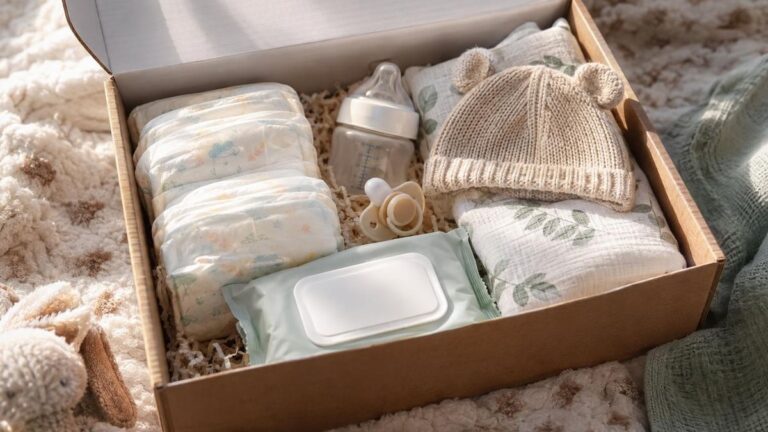
A baby comes with a very long shopping list. Fortunately, stores and baby brands want to earn the trust of new parents, and a few of the welcome gifts they hand out are truly free.
- Registry welcome boxes
- Samples from baby brands
- Insurance steps after the birth
- Free checkups for your baby
Why Baby Brands Give So Much Away
Parents often stay with whichever diaper, wipe or bottle worked at first. This is why baby brands work so hard to be the first in your home, using trial packs, coupons and welcome boxes.
For you, it means a chance to check sizes and textures before you buy in bulk. Each baby reacts differently to diapers, wipes and lotions, so starting with small amounts saves both money and frustration.
Registry Welcome Boxes
For expecting parents, the simplest freebie comes from setting up a baby registry. Here are two well-known cases:
- Target Baby Registry: Target advertises a free welcome kit of baby brand samples for parents who start a registry.
- Amazon Baby Registry: Amazon sends a welcome box to registry owners who qualify under its eligibility rules. They can change, so the current terms are on its help page.
A registry also steers family and friends toward what you really need, so you do not end up with duplicate gifts piling up in the closet.
Samples and Tests for Baby Products
Testing communities sometimes launch campaigns covering feeding items, laundry detergent, baby wash and wipes. Fill in your household profile on platforms such as Home Tester Club and BzzAgent, and say that you have a baby or are expecting one.
Loyalty programs at pharmacies are another quiet way to save on diapers and baby care. See our pharmacy rewards and wellness samples piece to find out how those points build up.
The Money Side: Insurance Deadlines Come First
Free samples can wait a week. Putting your baby on your health insurance cannot. HealthCare.gov says that a birth opens a Special Enrollment Period. On the Marketplace, you usually have 60 days after the birth to sign up or add the baby, and coverage can begin on the day of birth. Job-based plans have to allow at least 30 days.
Most health plans must also pay in full for a set of preventive services for children when you see an in-network provider. These include well-baby visits, newborn screenings and recommended vaccines.
If you are planning for larger costs, like the delivery bill, a crib or childcare, think carefully before taking out a loan or running up a new credit card balance. Putting costs on a card only makes sense when you are able to clear the balance every month.
Where Each Freebie Comes From
| Source | What you may get | What it takes |
|---|---|---|
| Registry welcome box | A box of baby brand samples | Creating a registry and meeting the store’s rules |
| Testing platforms | Full-size products to review | A complete profile and an honest review |
| Pharmacy rewards | Store credit and coupons | Buying what you already need |
| Health insurance | Well-baby visits and vaccines at no cost | Adding the baby on time and staying in network |
A Simple Plan for the First Months
- Put your baby on your health plan within the enrollment window.
- Set up one registry and read what it requires for the welcome box.
- Update your details on one or two testing sites.
- Sign up for the loyalty program at the pharmacy you already use.
- Keep notes on which samples your baby liked before you buy in bulk.
What to Put on the Registry First
Registries tend to fill with cute outfits, while the things you use every day show up last. Move the basics to the top: a car seat, a safe place to sleep, diapers in several sizes, wipes, burp cloths and a bottle or two, even if you plan to breastfeed.
Save room for gift cards from the shop where diapers will be bought. Babies jump sizes quickly in the early months, and samples cannot predict that.
Life Insurance Is Part of the Checklist
Life insurance often crosses parents’ minds once the baby is here. Term life insurance lasts for a fixed number of years and is the kind most families look at first. Some employers include group life coverage among their benefits, so check with HR about what the job already gives you, then compare quotes from licensed insurers and pick a coverage period that fits the years your family would rely on your income.
You do not need to do all of this in week one, but listing it keeps it from slipping away for years.
The links go to official websites. Nothing here is financial advice, and we have no affiliation with these programs.
Frequently Asked Questions
Is the registry welcome box really free?
It costs nothing for registry owners who qualify, but each store has its own conditions, and they may change. Look at the official page before you rely on it.
When do I need to add my baby to my health insurance?
Marketplace plans usually give you up to 60 days after the birth, and job-based plans must give at least 30 days. To be safe, call your plan right away.
Can I ask for samples of formula or diapers?
Many brands have sample or coupon programs for parents. Go through the brand’s official website, and speak with your pediatrician before you switch formula.